Artificial Intelligence
OpenAI Will Test Visual ChatGPT Ads During Image Generation Later This Month
Updated on Mon, Oct 5, 2026
Share
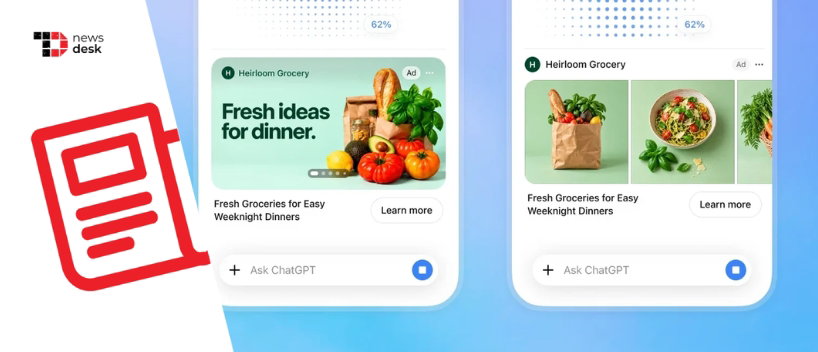
OpenAI is expanding its advertising push with a new visual ad format that will initially appear while users generate images in ChatGPT, as the company looks to create more advertising inventory across a platform it says reaches 1.2 billion people every week.
The test will begin later this month in the US with an initial group of advertisers, with OpenAI saying the ads will remain clearly labeled and separate from AI-generated images.
TL;DR
- OpenAI will test a new visual advertising format during ChatGPT image generation later this month.
- The initial rollout will be limited to the US and a select group of advertisers.
- Ads will remain separate from generated images and will not influence ChatGPT’s responses.
- OpenAI is also expanding ad measurement, attribution and brand-suitability tools as its advertising business grows.
OpenAI Brings Visual Ads To ChatGPT Image Generation
OpenAI revealed the new advertising format in an official announcement, saying the ads are designed to help people visualize how products and services could fit into their lives.
The advertisements could include images showing product inspiration, how a product is used, or experiences associated with a particular service. The company said this gives advertisers another way to communicate through images rather than relying primarily on text-based promotional material.
Initially, the visual format will be tested while ChatGPT generates images.
“Ads will be clearly labeled, and remain separate from the image being created,” OpenAI said.
The company also reiterated that advertising does not influence the answers ChatGPT provides. The experiment will begin later this month in the US with an initial group of advertisers.
BleepingComputer noted that the format effectively creates advertising inventory during the period users spend waiting for ChatGPT to complete an image-generation request.
Who Will See Ads In ChatGPT?
The new format does not mean every ChatGPT user will begin seeing ads.
According to OpenAI’s ChatGPT Ads documentation, ads are not shown to Plus, Pro or Business plan users, or to accounts identified as belonging to people under 18. OpenAI separately states that advertising may appear for eligible users on its ad-supported plans.
Existing ChatGPT advertisements can include an advertiser name, logo, headline, description, landing page and image creative.
OpenAI says its ad-selection system considers signals including the context and intent of the current conversation, information supplied by advertisers and, when ad personalization is enabled, selected signals from a user’s broader ChatGPT experience.
Topics For More Insights
ChatGPT Ads Get More Measurement Tools
Visual advertising is only one part of OpenAI’s latest expansion.
The company is adding integrations with Hightouch, Tealium and LiveRamp to make it easier for advertisers to send conversion information from existing systems to ChatGPT Ads. It is also working with attribution providers including AppsFlyer, Adjust, Branch, Triple Whale, Kochava, Singular and others.
OpenAI is also developing brand-suitability evaluation pilots with DoubleVerify and Integral Ad Science.
“We’re excited to partner with OpenAI with the goal to bring independent measurement to this dynamic environment while respecting user privacy,” said DoubleVerify CEO Mark Zagorski.
The additions address an important concern among advertisers.
Digiday reported that advertisers have been asking OpenAI for improved measurement capabilities, more advertising formats and additional inventory since ChatGPT advertising began expanding earlier this year.
OpenAI Has Been Rapidly Expanding ChatGPT Ads
OpenAI has gradually built out the advertising side of ChatGPT throughout 2026.
In May, the company introduced expanded buying options, including CPC bidding and a self-service Ads Manager, as detailed in an OpenAI advertising update. The company said the tools would allow advertisers to buy, manage and measure campaigns more flexibly while keeping advertisements separate from ChatGPT’s answers.
More recently, OpenAI introduced Sponsored Agents and additional AI-powered advertising features. Its September advertising announcement described Sponsored Agents as experiences that allow users to start conversations with business-sponsored agents after interacting with an advertisement.
The company says ChatGPT now reaches 1.2 billion people each week, positioning advertising as another way to support access beyond paid subscriptions.
OpenAI is also tightening the controls around where those advertisements appear. Its advertising safeguards are designed to keep ads away from sensitive, emotionally vulnerable or otherwise unsuitable conversations, while automated systems, human oversight and monitoring are used to enforce its policies.
For advertisers, the new image-generation format creates another place to reach users inside ChatGPT. For users, the key distinction is that OpenAI says the advertisements will remain labeled and separate from both the images being generated and the answers provided by ChatGPT.
First published on Mon, Oct 5, 2026

Liked what you read? That’s only the tip of the tech iceberg!
Explore our vast collection of tech articles including introductory guides, product reviews, trends and more, stay up to date with the latest news, relish thought-provoking interviews and the hottest AI blogs, and tickle your funny bone with hilarious tech memes!
Plus, get access to branded insights from industry-leading global brands through informative white papers, engaging case studies, in-depth reports, enlightening videos and exciting events and webinars.
Dive into TechDogs' treasure trove today and Know Your World of technology like never before!
Disclaimer - Reference to any specific product, software or entity does not constitute an endorsement or recommendation by TechDogs nor should any data or content published be relied upon. The views expressed by TechDogs' members and guests are their own and their appearance on our site does not imply an endorsement of them or any entity they represent. Views and opinions expressed by TechDogs' Authors are those of the Authors and do not necessarily reflect the view of TechDogs or any of its officials. While we aim to provide valuable and helpful information, some content on TechDogs' site may not have been thoroughly reviewed for every detail or aspect. We encourage users to verify any information independently where necessary.
Loading comments...