Google has reportedly placed an order with Intel to manufacture more than three million Tensor Processing Units (TPUs) in 2028, giving Intel’s foundry ambitions a major vote of confidence as AI chip demand continues to strain global semiconductor supply chains.
The report, originally from The Information and carried by Reuters, suggests Google is looking to diversify production of its in-house AI accelerators beyond Taiwan Semiconductor Manufacturing Company (TSMC). It also said Nvidia is evaluating Intel’s technology for a future processor that could combine four graphics chips into a single unit, although Nvidia has not placed an order yet.
TL;DR
- Google has reportedly ordered more than three million TPUs from Intel for 2028 production.
- Reuters could not independently verify the report, and Intel declined to comment.
- Nvidia is also said to be evaluating Intel technology, but has not placed an order.
- The move could strengthen Intel Foundry as AI firms seek alternatives to TSMC.
Alphabet’s Google has reportedly placed an order with Intel to manufacture more than three million TPUs in 2028, according to The Information, which Reuters cited as saying the details came from people with direct knowledge of the discussions.
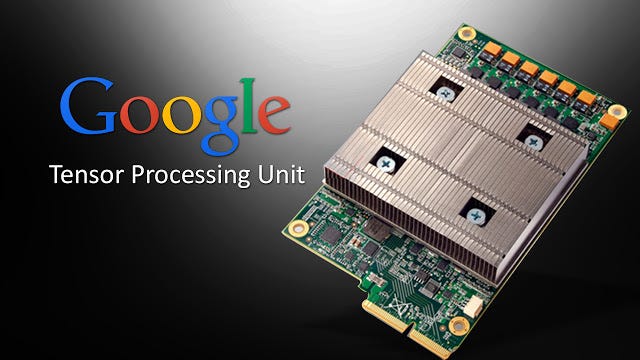
The potential deal would mark a notable win for Intel’s contract chip manufacturing business, especially as the company works to rebuild its standing against TSMC, which remains the dominant advanced chipmaker. Reuters also noted that AI-driven chip demand has put pressure on TSMC’s ability to supply enough capacity, pushing major AI chip designers to consider Intel as another manufacturing option.
However, this is still a reported development, not a confirmed customer announcement. Reuters said it could not independently verify the report. Intel declined to comment, while Alphabet and Nvidia did not immediately respond to requests for comment.
Google has spent years building TPUs as an alternative to general-purpose GPUs for training and serving AI models. Its latest public TPU generation, Ironwood, was introduced as Google’s seventh-generation TPU and its first chip designed specifically for inference workloads. Google said Ironwood scales up to 9,216 liquid-cooled chips and is part of its AI Hypercomputer architecture for demanding AI workloads.
Google Cloud documentation also lists TPU7x, part of the Ironwood family, as designed for large-scale
AI training and inference. The system supports 9,216 chips per pod, with each TPU7x chip offering 192 GiB of HBM capacity and 7,380 GiBps of HBM bandwidth.
In other words, Google’s chip roadmap is not just about hardware independence. It is about controlling more of the AI stack, from model infrastructure to cloud services, at a time when accelerator availability can influence how quickly AI products reach customers.
For Intel, the reported Google order would add momentum to a broader foundry push. Intel has been trying to position its manufacturing network, advanced packaging capabilities and next-generation processes as credible options for high-performance AI customers. Its 18A foundry page highlights global manufacturing, advanced packaging, interconnects and assembly and testing services.
Topics for more insights:
Intel and Google already expanded their AI infrastructure collaboration in April 2026, focusing on Xeon processors and custom infrastructure processing units (IPUs). At the time, Intel CEO Lip-Bu Tan said, “Scaling AI requires more than accelerators,” adding that CPUs and IPUs are central to modern AI workload performance.
The Nvidia angle is also important. In 2025, Intel and Nvidia announced a collaboration to jointly develop AI infrastructure and personal computing products, with Nvidia investing $5 billion in Intel common stock, subject to approvals. Nvidia CEO Jensen Huang said the collaboration would help lay the foundation for the next era of computing.
This is not a confirmed Google-Intel announcement yet, but the report lands at a critical moment for AI hardware. If the order goes ahead as reported, Intel could gain a marquee foundry customer, Google could reduce reliance on a constrained chip supply chain, and Nvidia’s reported evaluation could signal broader industry interest in Intel as a serious backup for advanced AI chip production.
