Artificial Intelligence
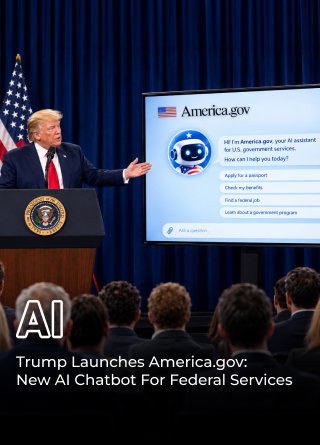
Trump Launches America.gov: A New AI Chatbot For Federal Services
Share
TL;DR
That is the promise behind America.gov, a new AI-powered government portal designed to make federal information and services easier to find, understand, and eventually use.
-
America.gov is a redesigned US government portal with an AI chatbot that helps users navigate federal information through natural-language questions.
-
The chatbot uses AI technologies including Gemini and Grok to interpret queries and connect users with relevant government resources.
-
Users can currently ask questions without creating an account, while future integrations are expected to support more personalized and transactional services.
-
The platform aims to reduce the need to search across multiple agency websites by creating a more unified digital entry point for government services.
-
America.gov can simplify navigation, but users should still verify important information with the responsible federal agency because AI-generated responses may be incomplete, outdated, or incorrect.
Introduction
Anyone who has watched The Good Place will remember how hilariously complicated its afterlife bureaucracy can get. There are departments within departments, endless rules, confusing procedures, and plenty of moments where simply figuring out who handles what becomes a task in itself.
Real-world government services can sometimes feel surprisingly similar. A straightforward request may require identifying the correct agency, searching through several websites, finding the right form, and checking whether the information is still current.
America.gov is an attempt to simplify that maze.
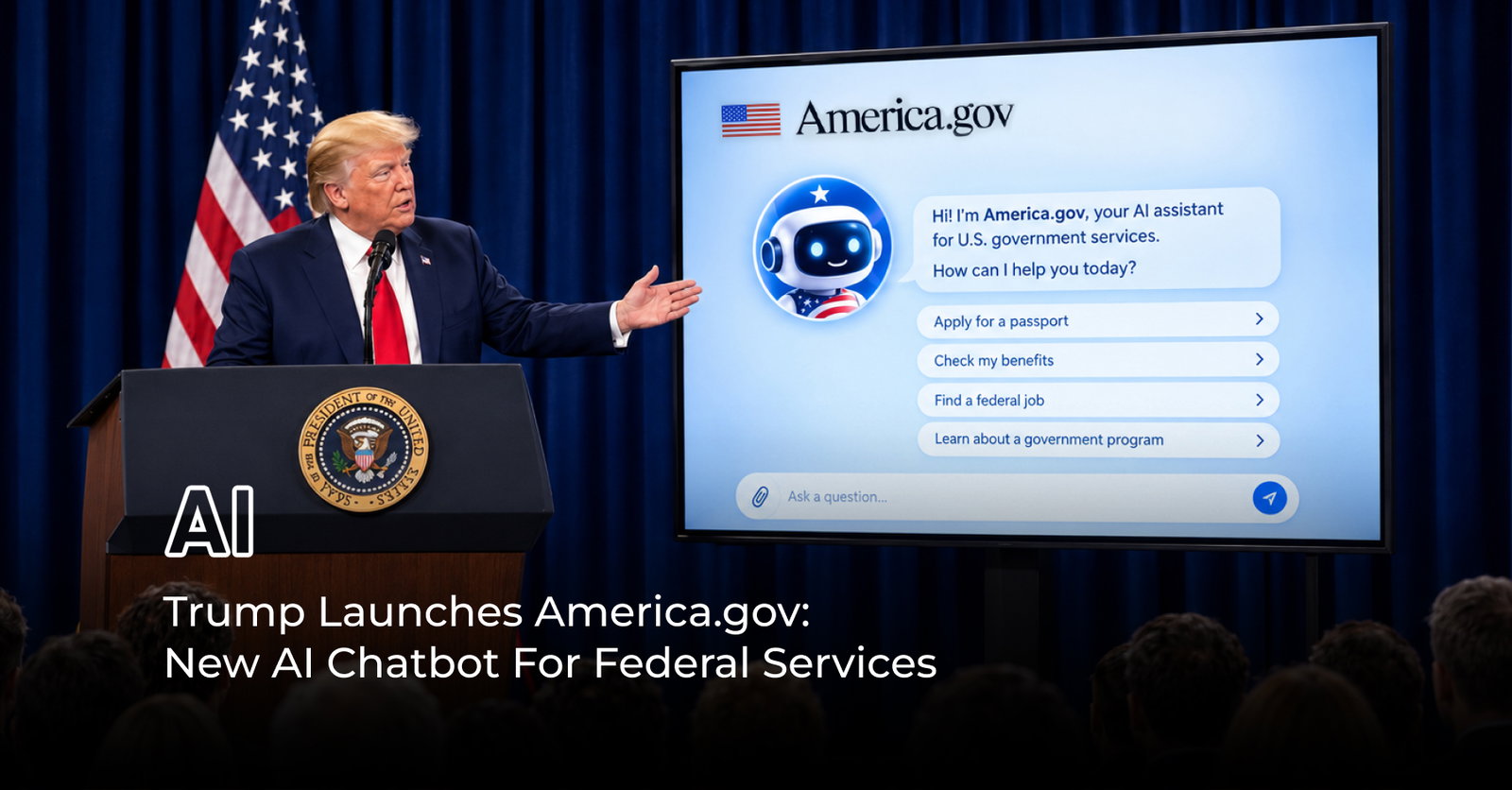
President Donald Trump launched the redesigned America.gov AI chatbot on September 29, 2026, positioning it as a central digital entry point for people seeking information and services from the US government. Instead of requiring users to understand how federal agencies are structured, the platform lets them describe what they need in everyday language and uses AI to guide them toward relevant government information.
For now, the chatbot mainly helps people find and understand that information. The broader vision, however, is more ambitious: America.gov is intended to evolve into a place where users can eventually move from asking a question to completing certain federal tasks without jumping between multiple agency websites.
What Is America.gov And How Does Trump's New AI Chatbot Work?
At its simplest, America.gov is an AI-powered interface for navigating government information.
A user can visit the site and ask something conversational, such as how to renew a passport, what documents might be required for a government service, where to find Social Security information, or which federal resource applies to a particular situation.
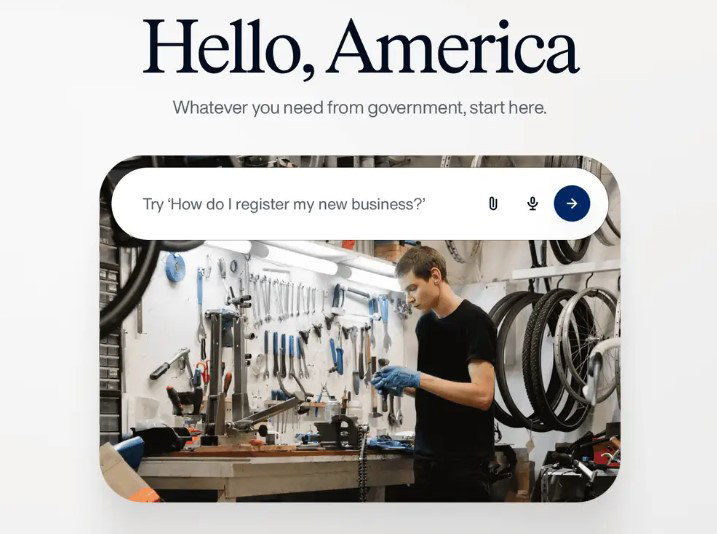
The system then searches government information and produces an AI-generated explanation, along with links that users can follow to the original government resources.
This is different from a conventional government search engine.
Search typically gives users a list of webpages and leaves them to determine which result answers their question. The America.gov AI chatbot attempts to perform some of that work itself by interpreting the question, finding relevant government material, and explaining it in a more direct format.
America.gov draws on information spread across more than 29,000 government websites, according to the government. That potentially gives the chatbot a broad pool of federal, state, and local government material to work with while allowing users to start from one interface.
This conversational model is important because government services rarely fit neatly into the way people naturally describe their problems.
Someone might not know which department deals with a particular benefit, license, document, or application. They simply know what they are trying to accomplish. America.gov is designed to work from that starting point.
The user-friendly experience may look simple on the surface, but it depends on a more complex AI layer working behind the scenes. To understand how America.gov interprets questions and turns them into useful guidance, it helps to look at the technology powering the chatbot.
Is America.gov Powered By Gemini And Grok?
The technology behind the platform has attracted almost as much attention as the chatbot itself.
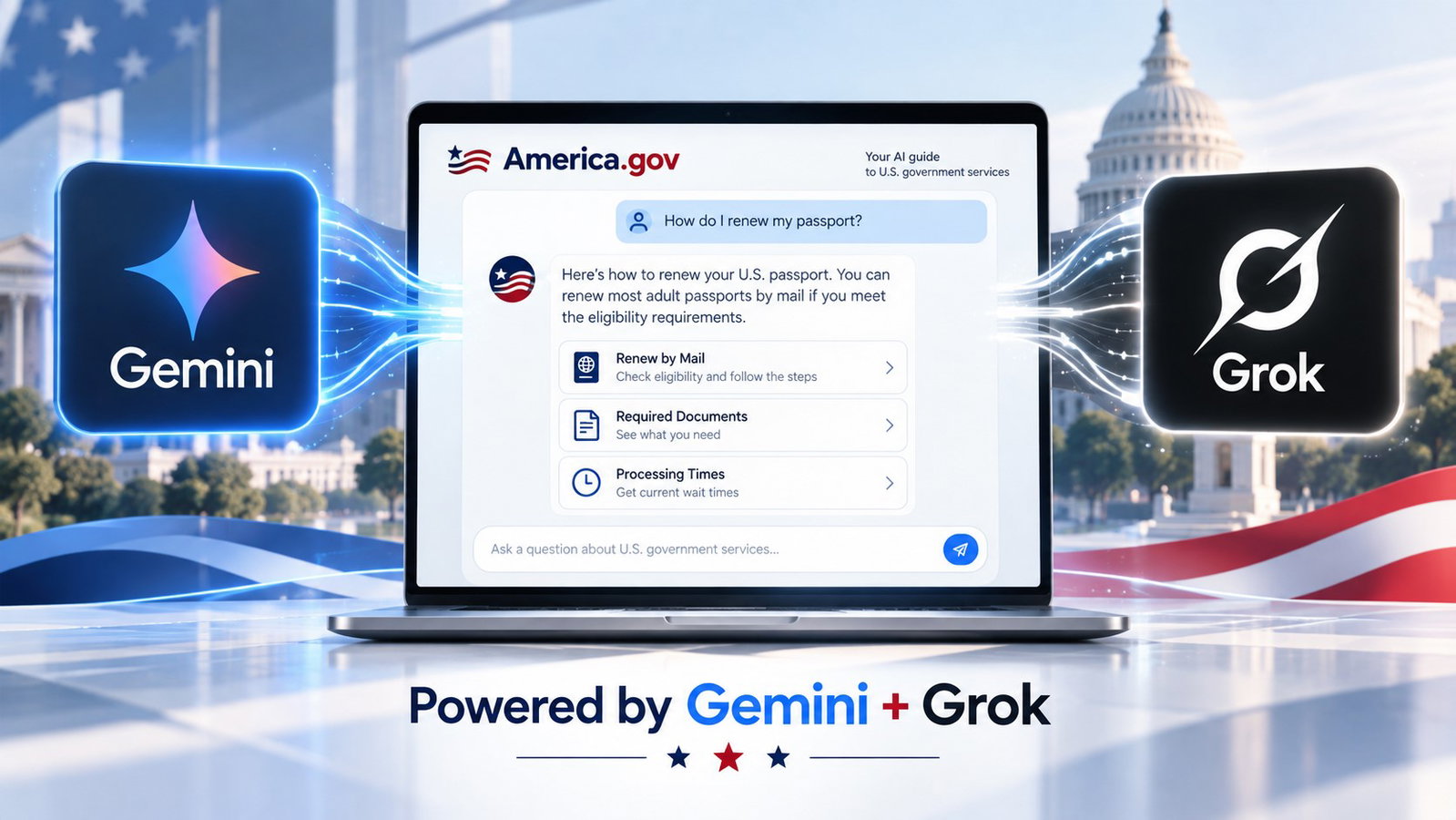
Google has confirmed that Gemini is involved in the America.gov project, while officials involved in the launch have also said that Grok, developed by Elon Musk's xAI, was used.
That makes the Gemini-Grok combination noteworthy. Rather than presenting America.gov as a chatbot tied publicly to one consumer AI brand, the government has built a broader experience in which commercial AI technology works behind a government-controlled interface.
That distinction matters.
General-purpose chatbots can draw from enormous amounts of information and are designed to answer an equally enormous range of questions. America.gov has a much narrower mission: help users understand and access government information and services.
The effectiveness of the platform will consequently depend on more than the intelligence of its underlying models. Source selection, government-data freshness, retrieval accuracy, system instructions, safeguards, and the quality of agency integrations will all determine whether the chatbot gives people useful answers and how to utilize it effectively.
How To Use The America.gov Chatbot?
One of the platform's biggest advantages is that there is very little to learn before using it.
Users can go to America.gov in a web browser and type a question into the chat interface. There is currently no separate America.gov mobile app, although the website works across computers, tablets, and phones.
An account is also not required simply to ask the chatbot a question.
Instead of searching for an agency first, users can begin with the task itself. For instance, someone could ask about getting a passport, locating a nearby government resource, understanding a benefit, or figuring out the next step in an administrative process.
The chatbot returns an explanation and points users toward the relevant government sources.
That is effectively how to use the America.gov chatbot today: ask the question in the same language you would use when asking another person for help, read the response, and then verify significant details through the official links provided with it.
The final step is especially crucial.
America.gov itself warns that its AI-generated responses may occasionally be incomplete, incorrect, or outdated. For issues involving deadlines, benefits, immigration, money, legal requirements, or other consequential decisions, the responsible agency's information remains authoritative.
The simple question-and-answer experience makes America.gov easy to approach, but it also raises the next practical question: what can the chatbot actually do beyond pointing users in the right direction?
What Can America.gov Actually Do Right Now?
The launch version of America.gov should not be confused with the full digital-government vision being built around it.
At present, its strongest capability is finding and explaining government information.
It does not automatically submit an application simply because a user asks about one. Nor does asking the chatbot a question contact a government agency, determine eligibility for a benefit, approve an application, or change an official record.
Those distinctions keep America.gov primarily in the role of an intelligent guide for now.
That is expected to evolve.
The executive order behind America.gov directs agencies to integrate qualifying digital services into the platform and calls for Login.gov to become its authentication system. The government's stated goal is for users eventually to move from asking, “How do I do this?” to actually completing supported tasks through the same digital entry point.
Plans for America.gov include adding services like passport assistance and Medicare enrollment as the platform expands.
Not every government interaction will be folded into the system. The executive order excludes IRS tax filing as well as specified national-security-sensitive services from its definition of covered services.
So, the long-term idea is not literally to put every government function inside one chatbot. It is to make America.gov the common front door for a large portion of high-volume digital public services.
As America.gov moves from guidance to action, convenience brings a bigger question with it: what happens to your data privacy?
What About Privacy When Talking To A Federal AI Chatbot?
An AI chatbot operated by the federal government naturally raises a question that users may not ask when using an ordinary website: what happens to the conversation?
America.gov has been designed to work without requiring people to identify themselves for ordinary questions.
The site's privacy documentation says chat messages are not maintained as an account conversation history. Conversations are primarily held in the browser, although some AI-generated responses can be temporarily cached for performance. Operational measurements are also collected, and security logs can contain information such as IP addresses.
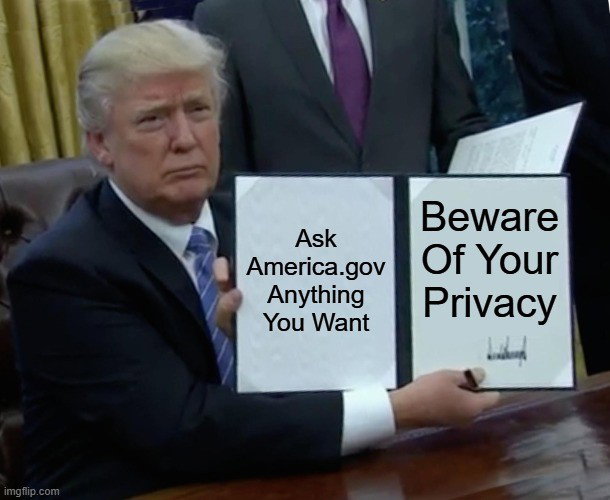
The platform says its AI providers operate under zero-data-retention agreements and are prohibited from using user prompts to train their AI models.
America.gov also allows PDF attachments, but its own guidance tells users to avoid submitting documents containing personally identifiable information.
The system attempts to detect and remove some types of private data before processing an uploaded document, but that should not be treated as a reason to upload sensitive records unnecessarily.
In other words, the most sensible way to use the chatbot today is much like any informational government service: explain what you are trying to accomplish without volunteering sensitive personal details unless a future authenticated service specifically requires them.
Privacy is only one part of building trust in a government AI system. The other is reliability, especially when users may act on information involving benefits, documents, deadlines, or official procedures, making response accuracy just as critical as data protection.
What Happens When A Government AI Gets The Answer Wrong?
This can be the biggest test for the Trump administration's federal AI chatbot.
AI-generated summaries can make complicated information easier to understand, but generative AI systems are not guaranteed to be correct.
That matters considerably more when the subject is a government deadline, official document requirement, benefit, immigration procedure, or financial obligation than when someone is asking a chatbot for a restaurant recommendation.
America.gov acknowledges that problem directly. Its terms tell users that AI-generated information can be wrong or become outdated when programs change. Users are encouraged to check the government sources included with an answer before acting on anything important.
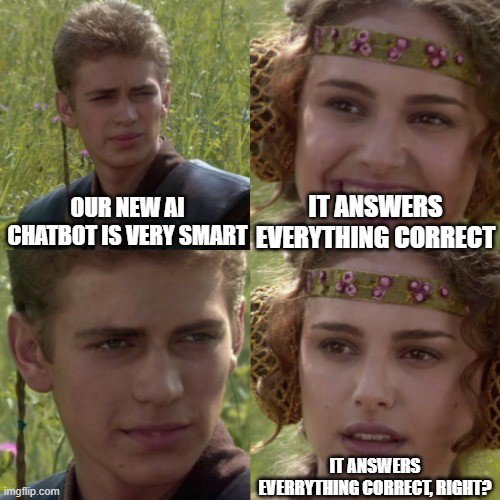
The source-backed design could become one of the platform's most important features. The chatbot is useful when it reduces the amount of searching a person needs to do, but the underlying government page still provides a reference point when accuracy carries real consequences.
The principle is simple: AI can explain the map, but the agency responsible for the service still controls the road.
The accuracy concerns become even more sensitive when the conversation moves beyond routine government services. Political and historical questions put added pressure on the chatbot’s response rules, source selection, and boundaries, which is exactly where America.gov has begun drawing wider attention.
Why Did The Chatbot's Political Answers Attract Attention?
America.gov quickly demonstrated another challenge faced by government-operated AI: deciding how broadly a public-service chatbot should answer questions outside its central service mission.
Topics For More Insights:
Soon after launch, users tested it with political and historical questions. Some initial responses contradicted claims President Trump has made, including on the 2020 presidential election. The site subsequently began declining some political questions or treating them as outside its focus on government information and services.
Those launch-day changes are less important to the platform's everyday utility than the broader issue they expose.
A government chatbot needs rules about what it should answer, which official material takes precedence when sources differ, and when it should simply direct users elsewhere. Those decisions become especially visible when the subject moves from straightforward service information into contested political questions.
As America.gov develops with experimentation, transparency around boundaries will be important for users trying to understand what the chatbot is designed to do and what it deliberately avoids.
America.gov Is An AI Experiment With Very Real Stakes
When Trump launched America.gov, the chatbot understandably captured much of the attention. Gemini, Grok, conversational search, and some unusual early answers made for eye-catching talking points.
Yet the more consequential question is whether America.gov can make interacting with the federal government genuinely easier.
The first version provides a glimpse of that possibility. People can ask questions naturally, search across a huge collection of government information from one place, and receive explanations tied back to official resources.
The next stage will be harder.
America.gov will need reliable agency integrations, strong authentication, current information, effective privacy controls, and safeguards against incorrect AI-generated guidance. It will also need to maintain a clear distinction between helping users understand a government process and making an official government determination.
If those pieces come together, the America.gov AI chatbot could evolve from a convenient search assistant into something considerably more significant: a common interface between people and a large portion of the US government's digital services.
For now, think of America.gov as the front desk, not the entire government office.
But that front desk is learning how to talk back.
Conclusion
America.gov marks a significant shift in how people may interact with federal services, moving from fragmented agency websites toward a more conversational, AI-led experience. Its real impact will depend on accuracy, privacy safeguards, and how deeply federal services are integrated over time.
For now, the chatbot is best viewed as an intelligent navigation layer that can simplify access to government information while still requiring users to verify important details through official agency sources.
Frequently Asked Questions
Can America.gov Eventually Replace Individual Federal Agency Websites?
Not entirely. America.gov is designed to become a central access point for many government services, but individual agencies will still remain responsible for their programs, records, rules, and authoritative information. The platform is more likely to function as a unified interface that connects users with agency systems rather than replacing the underlying infrastructure that powers federal services.
How Could America.gov Handle Personalized Services Without Exposing Sensitive User Data?
More personalized transactions are expected to rely on authenticated systems such as Login.gov rather than requiring users to enter sensitive information directly into an open chatbot conversation. This separation between conversational assistance and verified identity could allow America.gov to help users complete services while limiting unnecessary exposure of personal information to the AI layer.
What Will Determine Whether The America.gov AI Chatbot Can Be Trusted For Complex Government Questions?
Trust will depend on more than the performance of Gemini, Grok, or any other underlying AI model. The platform will need reliable retrieval from authoritative government sources, frequent data updates, transparent citations, effective safeguards against hallucinations, and clear boundaries around what the chatbot can determine. For high-stakes matters, the responsible government agency will remain the authoritative source.
Thu, Oct 1, 2026

Enjoyed what you've read so far? Great news - there's more to explore!
Stay up to date with the latest news, a vast collection of tech articles including introductory guides, product reviews, trends and more, thought-provoking interviews, hottest AI blogs and entertaining tech memes.
Plus, get access to branded insights such as informative white papers, intriguing case studies, in-depth reports, enlightening videos and exciting events and webinars from industry-leading global brands.
Dive into TechDogs' treasure trove today and Know Your World of technology!
Disclaimer - Reference to any specific product, software or entity does not constitute an endorsement or recommendation by TechDogs nor should any data or content published be relied upon. The views expressed by TechDogs' members and guests are their own and their appearance on our site does not imply an endorsement of them or any entity they represent. Views and opinions expressed by TechDogs' Authors are those of the Authors and do not necessarily reflect the view of TechDogs or any of its officials. While we aim to provide valuable and helpful information, some content on TechDogs' site may not have been thoroughly reviewed for every detail or aspect. We encourage users to verify any information independently where necessary.
Loading comments...