Manufacturing Technology
How Autonomous Electric Trucks Are Reshaping Freight Logistics
Share
TL;DR
-
Autonomous electric trucks combine battery-electric propulsion with AI-powered automated driving, sensors, mapping, and onboard computing.
-
Autonomous does not automatically mean electric, and an electric truck is not necessarily self-driving or driverless.
-
Freight networks could gain higher vehicle utilization, smarter routing, predictive maintenance, lower tailpipe emissions, and more consistent operations.
-
Charging infrastructure, battery weight, grid capacity, regulations, cybersecurity, liability, and public trust remain major barriers to scale.
-
The United States, China, and Europe are important development markets, but deployments vary widely in autonomy and electrification.
-
Einride offers one of the clearest real-world examples combining Level 4 autonomy with battery-electric freight.
Introduction
Are you a fan of the Transformers series? What a silly question, of course you are. The real question is, are you on the side of the Autobots or Decepticons, and which transformer was your favorite?
For most kids, the answer was Optimus Prime (Bumblebee was a close second). He always showed up at crucial moments to defeat his enemies and snatch a victory for the Autobots. Plus, he was one of the most respected and revered Transformers among his friends and foes.
Also, he looked really cool, as a bulky robot that transformed into a sleek-looking red and blue semi-trailer truck. So cool, right?
Unfortunately, in the real world, we're a ways away from having such awesome transforming vehicles with artificial intelligence (AI) that's, for all intents and purposes, as sentient as a normal human.
However, we do have self-driving trucks that are already plying selected roads and highways, transporting goods and helping us execute freight logistics tasks with little or no onboard human intervention. Just give them a defined route and watch them go. #Wheeeeeeee
So, how exactly are they redefining freight logistics and where will the future of autonomous electric trucks drive off to? Let's (pack and) unpack.
What Are Autonomous Electric Trucks?
Autonomous electric trucks pair a battery-electric powertrain with automated driving systems that handle driving tasks within defined conditions.
Their "brain" is powered by artificial intelligence (AI), combining cameras, radar, LiDAR, GPS, maps, sensor fusion, and onboard computing to understand surroundings and react in real time. They sit at the intersection of autonomous mobility and electrification.
The most advanced examples are Level 4 autonomous commercial vehicles, where human driving is not required to manage risk inside approved operating conditions. That makes predictable freight routes, ports, yards, and hub-to-hub operations natural early use cases. For more context, AI's role in self-driving vehicles extends from perception to real-time decision-making.
Before Optimus Prime gets credit for every smart truck on the highway, there is one important difference to unpack.
Autonomous Trucks Vs. Electric Trucks: What's The Difference?
"Autonomous" describes how a truck drives. "Electric" describes how it is powered.
An autonomous truck can use a diesel powertrain, while electric Class 8 trucks can still require human drivers. Self-driving electric trucks combine both.
-
Einride fits that overlap directly, deploying Level 4 battery-electric trucks in Ohio logistics operations in 2026.
-
Aurora operates genuinely driverless Class 8 freight trucks in the United States, but its current International LT-based platform is not a battery-electric program.
-
DeepWay sells electric heavy-duty trucks in China with Level 2 assisted driving as standard while also testing Level 4 capabilities.
This convergence is creating the autonomous electric trucks freight industry, where software, energy, vehicle engineering, and logistics must work as one system.
So, what changes when that system gets to work?
How Are Autonomous Electric Trucks Reshaping Freight Logistics?
The shift goes beyond replacing a driver or swapping a diesel engine for a battery. Autonomous electric trucks can change how freight networks use time, energy, data, infrastructure, and vehicles.
Smarter Routes And Higher Fleet Utilization
AI can optimize routes, dispatching, charging windows, maintenance, and load planning using live fleet and supply chain data. Traffic, weather, road closures, delivery windows, vehicle range, and battery state can all influence when and where a truck should travel.
Autonomous trucks can also operate around some driver-hour constraints within their approved operating domains, potentially allowing suitable hub-to-hub vehicles to spend more time moving freight.
From Fixed Schedules To Connected Freight Networks
Traditional freight operations often depend on separate systems for warehouses, dispatchers, drivers, vehicles, and distribution centers. Autonomous freight can bring those systems closer together.
Trucks can become connected assets inside an optimized supply chain, sharing information with fleet platforms, loading systems, warehouses, and logistics hubs. It makes loading, transportation, and handoffs more coordinated. This also connects with the wider rise of physical autonomous machines across logistics and industrial operations.
Charging Becomes Part Of Freight Planning
For autonomous electric trucks, energy planning becomes part of logistics planning. Fleet software may need to consider battery charge, remaining range, charger availability, expected charging time, delivery schedules, payload, traffic, and depot capacity before assigning a truck to a route.
A vehicle capable of operating longer without an onboard driver still has to stop for energy. As the commercial EV freight transformation expands, decisions about routes and loads could increasingly be shaped by where and when energy is available.
Trucks Become Real-Time Decision-Making Systems
Autonomous vehicles process enormous amounts of sensor and vehicle data while operating. Edge computing allows important information to be processed close to the truck rather than waiting for every decision to travel to and from a distant cloud system.
Meanwhile, technologies such as IoT can help connect vehicles, infrastructure, maintenance systems, and fleet platforms. Together, these systems can support faster responses to changing road conditions, equipment problems, and logistics disruptions.
Freight Operations Become More Predictive
Connected vehicle data can also shift logistics from reacting to problems toward anticipating them. Fleets can use data about components, routes, energy consumption, traffic, and operating conditions to predict maintenance requirements or possible disruptions.
That can influence when a truck is serviced, which vehicle takes a particular load, or whether a route should change before delays occur. This is where technologies such as predictive analytics become increasingly valuable.
The IEA expects hub-to-hub logistics to be one of the earliest high-impact uses for autonomous trucks, estimating that up to one-quarter of hub-to-hub truck sales across the United States, Europe, and China could be autonomous by 2035. Transforma Insights forecasts 558,000 revenue-generating autonomous road-freight vehicles by 2034.
As adoption expands, the autonomous freight logistics market is moving beyond vehicle experimentation toward connected freight networks built around AI, electrification, automation, and real-time fleet intelligence.
Put together, this is how autonomous electric trucks reshape freight logistics: not simply by driving themselves, but by turning trucks into connected, data-driven parts of a wider freight network. Of course, fleets will only make that transition if the advantages justify the investment.
What Are The Advantages Of Autonomous Electric Trucks?
Combining autonomy with electric propulsion can improve how fleets use vehicles, energy, data, and people. The benefits go beyond simply removing a driver or diesel engine.
-
Higher Vehicle Utilization: Autonomous trucks can operate around some driver-hour constraints on approved routes, helping fleets coordinate driving, charging, and downtime more efficiently.
-
Smarter Routes And Energy Use: AI can use traffic, weather, delivery windows, and vehicle data to improve routing and charging decisions. AI in supply chain management can also help reduce bottlenecks and unnecessary mileage.
-
Lower Tailpipe Emissions: Battery-electric trucks produce no tailpipe emissions, while regenerative braking, optimized routing, and smarter load planning can further improve energy efficiency.
-
Predictive Maintenance: Connected sensors can monitor batteries, brakes, tires, and other components. Predictive maintenance can identify problems before breakdowns disrupt deliveries.
-
Connected Logistics: Autonomous trucks can connect with warehouses, loading systems, fleet platforms, and distribution hubs. Wider automation could make these handoffs faster and require fewer manual steps.
-
Faster Decisions: Edge computing helps autonomous trucks process sensor information locally for low-latency navigation and vehicle-control decisions.
-
New Human Roles: Driverless does not mean human-free. Remote operators, technicians, dispatchers, and fleet managers can still supervise operations and handle exceptions.
Those advantages make the technology attractive, but combining electrification and autonomy also means dealing with the challenges of both.
What Are The Challenges Of Autonomous Electric Trucks?
Fleets must solve electric-truck infrastructure problems while meeting the safety and technical demands of autonomous driving.
-
Charging Infrastructure: Heavy trucks require substantial charging power, making charger availability, grid capacity, charging time, and depot planning critical.
-
Range, Batteries And Payload: Battery weight, cargo, weather, terrain, and speed can affect range. New battery and energy technologies may improve this balance over time.
-
Complex Autonomous Systems: Cameras, radar, LiDAR, maps, redundant controls, and onboard computers add cost and complexity. Weather, construction, and unpredictable roads can also challenge self-driving vehicle technology.
-
Cybersecurity: Connected trucks must protect vehicle controls, software, communications, sensor data, and logistics platforms against attacks and disruption.
-
System Integration: Vehicles must work reliably with chargers, warehouses, fleet platforms, and other IoT networks.
-
Regulation And Trust: Liability, insurance, workforce concerns, public acceptance, and differing regulations could all slow deployment despite advances in manufacturing technology.
The roadblocks are substantial, but they have not stopped companies and countries from moving autonomous freight toward commercial deployment.
Who Is Leading The Autonomous Electric Truck Race?
The answer changes depending on whether we mean autonomous trucking broadly or the smaller group combining high automation with electric propulsion.
Let us separate the country truckers from the company truckers.
Country Truckers: Where Autonomous Freight Is Scaling
The United States is a major commercial proving ground. Aurora is scaling driverless freight across Sun Belt routes, while Einride's 2026 Ohio project is putting Level 4 autonomous electric trucks into logistics operations.
China brings enormous commercial scale. Inceptio said its autonomous-driving mileage passed 1 billion kilometers in September 2026, while DeepWay combines electric heavy trucks with assisted-driving systems and ongoing Level 4 testing.
Europe is advancing through trials and OEM partnerships. Einride and DAF began work in 2026 to integrate Level 4 autonomy into DAF's electric truck platform, with software integration planned from 2027.
The map is taking shape. Now for the names on the trucks.
Company Truckers: Who Is Putting Autonomous Electric Trucks To Work?
Einride is one of the clearest examples of autonomy and electrification being developed together, through its Ohio deployment and DAF partnership.
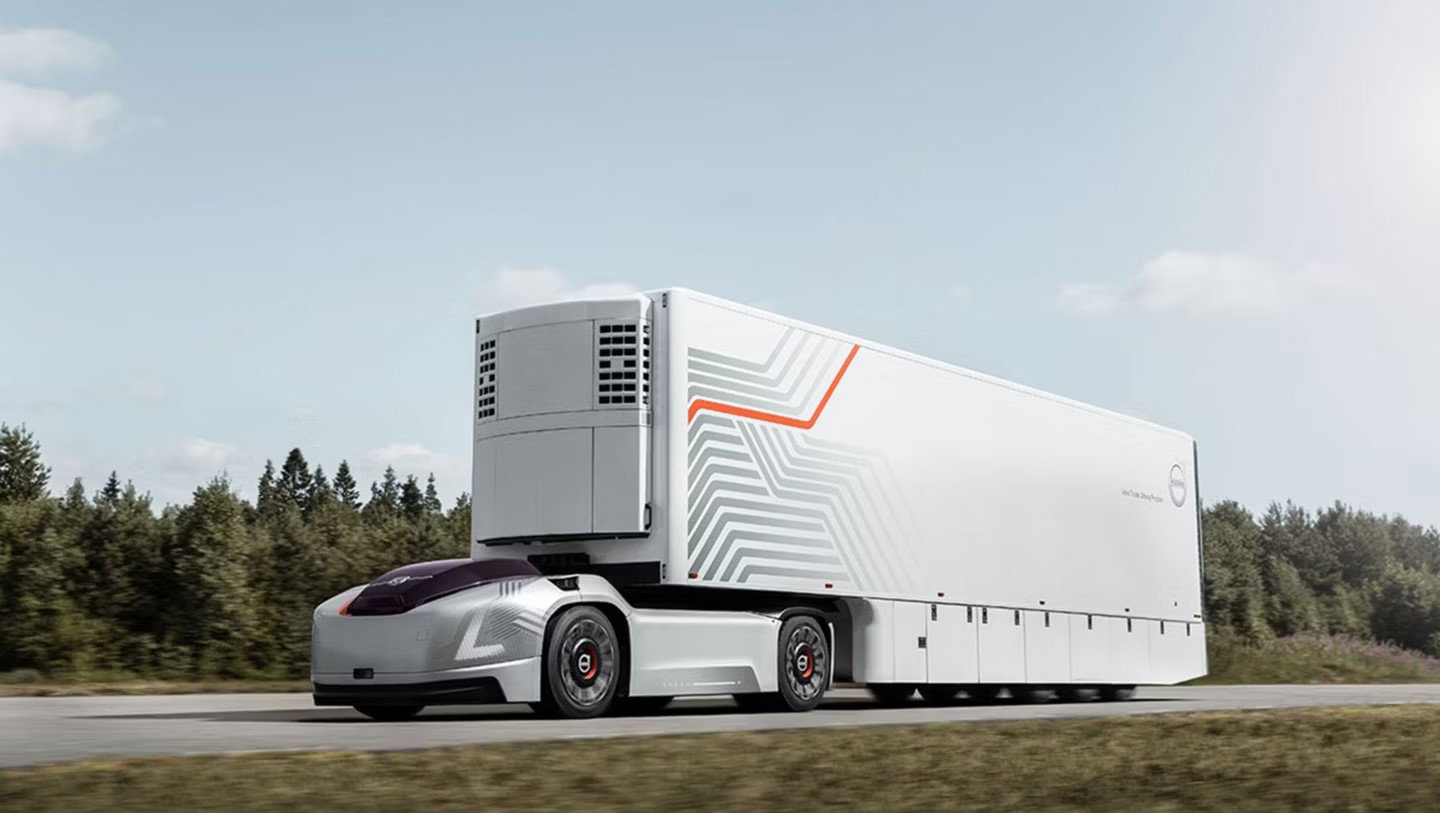
Volvo Trucks was an early mover with Vera, a cabless, fully electric autonomous freight vehicle introduced in 2018 for repetitive short-distance logistics.
Voltempo is developing a cabless, fully electric “Smart Trailer” designed for Level 4 autonomous freight, with its first prototype expected in 2027. By removing the driver cab, the company expects around 15% more cargo space and an additional 5–7 tonnes of payload.
DeepWay represents China's electric-heavy-truck path, although its mass-market vehicles today primarily use Level 2 assistance while Level 4 remains in testing and pilots.
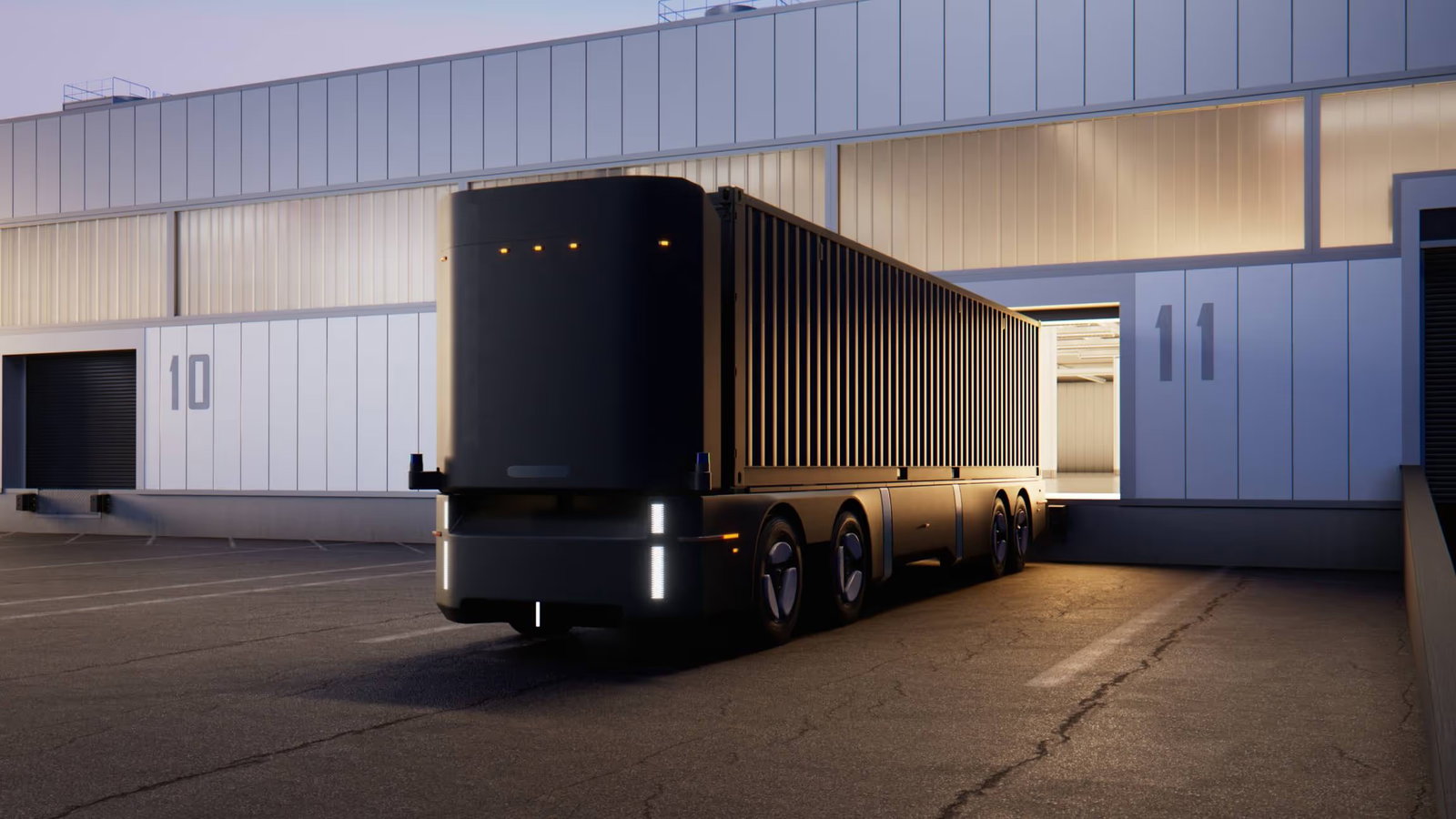
Humble Robotics is taking a more radical approach with the Humble Hauler, a purpose-built, cabless, fully electric Class 8 freight platform designed for dock-to-dock logistics. The 200-mile-range vehicle uses Level 4-capable autonomy and can carry standard 40-foot and 53-foot containers.
Aurora belongs in a separate lane. Its second-generation driverless trucks began operating without anyone behind the wheel in 2026, showing how far autonomous freight can scale even without an electric powertrain.
That helps answer which companies are leading the deployment of autonomous electric trucks, with an important disclaimer: the race remains early, and commercial leadership will depend on combining autonomy, charging, manufacturing, regulation, and freight economics at scale.
Topics For More Insights
The Final Stretch
Autonomous electric trucks are not Optimus Prime just yet, but freight is clearly moving toward smarter, cleaner, and increasingly automated vehicles. The real transformation comes from combining electric power, AI, connected logistics, and autonomous driving into one operating model.
Success will depend on more than getting trucks to drive themselves. Fleets also need charging, regulation, manufacturing scale, and economics to line up. When they do, freight logistics may look very different from today's highways.
Frequently Asked Questions
How Far Can Autonomous Electric Trucks Travel On A Charge?
There is no single range for autonomous electric trucks because autonomy does not determine battery capacity. Range depends on the truck model, battery size, payload, speed, terrain, temperature, and auxiliary power use. Freight operators therefore plan routes around the specific vehicle and charging network rather than an industry-wide number. Autonomous systems may optimize speed, routing, and charging decisions, but they cannot remove the physical limits of battery capacity or the effect of heavy loads.
Do Autonomous Electric Trucks Need Remote Operators?
Not always. Level 4 trucks can perform the driving task without a human driver inside their defined operating conditions, but fleets may still use remote assistance or supervision for unusual situations, logistics coordination, or operational support. Remote assistance also does not necessarily mean someone is continuously driving the truck from another location. The exact setup depends on the autonomous system, local regulations, operating environment, and the company's safety and fleet-management model.
Can Autonomous Electric Trucks Operate In Bad Weather?
Bad weather can limit autonomous trucking depending on the system's defined operating conditions. Heavy rain, snow, fog, road debris, construction, or poor visibility can challenge cameras, LiDAR, radar, mapping, and road markings in different ways. A Level 4 system should know when conditions fall outside what it is designed to handle and move toward a safe response. That makes weather capability an important question for fleets comparing autonomous truck platforms and potential routes.
Wed, Sep 23, 2026

Enjoyed what you've read so far? Great news - there's more to explore!
Stay up to date with the latest news, a vast collection of tech articles including introductory guides, product reviews, trends and more, thought-provoking interviews, hottest AI blogs and entertaining tech memes.
Plus, get access to branded insights such as informative white papers, intriguing case studies, in-depth reports, enlightening videos and exciting events and webinars from industry-leading global brands.
Dive into TechDogs' treasure trove today and Know Your World of technology!
Disclaimer - Reference to any specific product, software or entity does not constitute an endorsement or recommendation by TechDogs nor should any data or content published be relied upon. The views expressed by TechDogs' members and guests are their own and their appearance on our site does not imply an endorsement of them or any entity they represent. Views and opinions expressed by TechDogs' Authors are those of the Authors and do not necessarily reflect the view of TechDogs or any of its officials. While we aim to provide valuable and helpful information, some content on TechDogs' site may not have been thoroughly reviewed for every detail or aspect. We encourage users to verify any information independently where necessary.
Loading comments...