
Mobile
All You Need To Know About Snapdragon 8 Elite Gen
Share
TL;DR
-
Flagship chips are moving beyond raw speed, and the Snapdragon 8 Elite Gen 6 is built for that smarter, AI-driven era.
-
The next mobile performance race is about intelligence, efficiency, and context, not just benchmark numbers.
-
Smartphones are getting better at anticipating what users need, and Qualcomm’s latest flagship platform is designed around that shift.
-
As AI becomes central to the smartphone experience, the Snapdragon 8 Elite Gen 6 brings the hardware to support it.
-
The future of flagship phones is being shaped by smarter processing, stronger efficiency, and deeper on-device AI capabilities.
Introduction
In the famous TV series Person of Interest, “The Machine” rarely worked like a traditional computer waiting for someone to type in a command. It continuously interpreted signals, connected seemingly unrelated information, understood context, and tried to anticipate what might happen next.
Smartphones are obviously operating on a very different scale, but the underlying idea is becoming increasingly relevant.
For years, flagship mobile processors were judged largely by familiar metrics such as CPU speed, graphics performance, benchmark scores, and power efficiency. With the Snapdragon 8 Elite Gen 6, Qualcomm is expanding that definition by building more contextual and proactive intelligence directly into the mobile platform.
The Qualcomm Snapdragon 8 Elite Gen 6 combines a 2nm manufacturing process with next-generation Oryon CPU cores, upgraded Adreno graphics, a redesigned Hexagon NPU, advanced image processing, and next-generation wireless technologies. More significantly, these components are designed to work together across AI, imaging, gaming, connectivity, and sensing rather than operate as isolated upgrades.
That makes the Snapdragon 8 Elite Gen 6 less about one headline specification and more about how intelligently the entire smartphone can respond to what is happening around it. So, where does this new processor fit within Qualcomm’s flagship lineup, and what exactly has changed?
What Is Snapdragon 8 Elite Gen 6?
The Snapdragon 8 Elite Gen 6 is Qualcomm’s latest premium mobile system-on-chip designed for high-end Android smartphones.
It brings several critical smartphone components together into one platform, including the CPU, GPU, NPU, camera processing system, modem, wireless connectivity subsystem, and low-power sensing capabilities.
The chip is built using a 2nm manufacturing process, helping Qualcomm increase transistor density while creating more room to balance performance and efficiency.
At the CPU level, the platform uses Qualcomm’s custom Oryon architecture with eight processing cores. Two Prime cores can reach speeds of up to 5GHz, while six additional performance cores handle demanding and everyday workloads.
The processor also includes 16MB of Oryon Flex Cache, which helps improve data access and reduce unnecessary delays during demanding workloads.
Compared with the previous generation, Qualcomm claims the new platform delivers improvements across several major areas:
-
Around 10% higher CPU performance
-
Up to 37% better CPU power efficiency
-
Around 35% higher GPU performance
-
Up to 40% better GPU power efficiency
-
Around 14% higher NPU performance
-
Up to 20% better AI performance per watt
Those figures represent platform-level improvements, so actual results will vary from one smartphone to another depending on cooling, software tuning, battery management, and manufacturer configuration.
Even so, the improvements point toward a broader direction. Qualcomm is trying to make flagship smartphones faster without relying solely on higher power consumption.
That balance becomes especially important when considering the biggest theme of this generation: agentic AI.
Snapdragon 8 Elite Gen 6 Pushes Agentic AI Forward
Generative AI on smartphones has generally worked through direct interaction. A user types or speaks a request, the AI processes it, and the device returns an answer or completes an action.
The Snapdragon 8 Elite Gen 6 is designed to move beyond that model.
Its upgraded Hexagon NPU works alongside the Oryon CPU, Adreno GPU, and Qualcomm Sensing Hub to support more advanced on-device AI workloads. The goal is to enable AI systems that can understand context, identify patterns, plan actions, and assist users with less repetitive prompting.
For example, a smartphone could eventually recognize how a user edits photos, organizes information, adjusts settings, communicates across apps, or completes recurring tasks. Instead of waiting for detailed instructions every time, compatible AI systems could anticipate useful actions and provide assistance proactively.
The low-power sensing architecture is particularly crucial here.
Dual Micro NPUs can process audio, voice, and sensor information without constantly activating the more power-intensive components of the processor. Meanwhile, sensing image processors can help the device interpret camera-related context while managing energy consumption more efficiently.
This matters because always-available AI becomes far less useful if it constantly drains the battery.
By distributing AI workloads across specialized components, Qualcomm is trying to make contextual intelligence persistent without requiring the main processor to operate at full power all the time. That AI-first philosophy also extends directly into graphics and gaming.
Gaming Gets A Serious Graphics Upgrade
The Snapdragon 8 Elite Gen 6 introduces a substantially upgraded Adreno GPU designed for both higher graphical performance and greater efficiency.
Qualcomm claims approximately 35% stronger GPU performance compared with the previous generation, alongside up to 40% better GPU power efficiency.
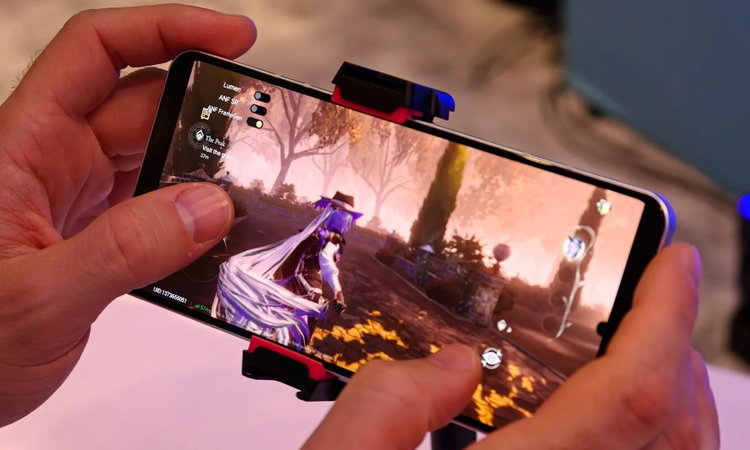
That combination is particularly remarkable for mobile gaming because peak performance alone is not enough. A smartphone also needs to sustain that performance without overheating or draining its battery quickly.
The platform supports hardware-accelerated ray tracing and advanced rendering technologies designed to improve lighting, reflections, geometry, and visual realism.
Qualcomm has also expanded its Snapdragon Elite Gaming capabilities, including technologies intended to reduce touch latency and improve responsiveness during competitive gaming.
Display support is equally aggressive.
The platform can support:
-
QHD+ displays at up to 240Hz
-
4K+ displays at up to 120Hz
-
External 4K displays at up to 120Hz
-
External 8K displays at up to 30Hz
Those numbers give smartphone manufacturers substantial flexibility when building gaming-focused or ultra-premium devices.
However, real-world results will still depend on the device itself.
A gaming smartphone with active cooling, a large vapor chamber, and aggressive performance tuning could produce very different sustained performance from a thinner flagship using the same processor.
This distinction matters because chipset capability defines the ceiling, while smartphone engineering determines how closely a device can reach it.
The same principle applies to one of the most important parts of any modern flagship phone: the camera.
Snapdragon 8 Elite Gen 6 Makes Smartphone Cameras Smarter
Smartphone photography is becoming increasingly dependent on computational processing rather than sensor size or megapixel counts alone.
The Snapdragon 8 Elite Gen 6 continues that shift with upgraded image processing and AI-assisted photography capabilities.
The platform uses triple 20-bit image signal processors and introduces technologies such as Intelligent Pixel Control, Elite Color Engine, and Motion Intelligence.
Intelligent Pixel Control is designed to analyze individual parts of an image more precisely, allowing the system to make targeted adjustments instead of applying broad changes across the entire frame.
Elite Color Engine focuses on areas such as color reproduction, lighting, tone, and video noise.
Motion Intelligence is designed to better predict subject movement and improve stabilization during recording.
The platform also supports extremely high-resolution image capture, along with advanced video formats such as 8K recording and high-framerate 4K video.
However, the more meaningful development may be how closely AI now interacts with the camera pipeline.
Future devices could use on-device intelligence to understand preferred editing styles, frequently used filters, common subjects, lighting preferences, or typical framing choices.
Instead of treating photography and AI as separate functions, the smartphone could increasingly combine them into one adaptive imaging system.
That same integration continues across another critical area: connectivity.
Connectivity Moves Toward Wi-Fi 8 And Faster 5G
The Snapdragon 8 Elite Gen 6 includes Qualcomm’s X105 5G Modem-RF system, designed to improve speed, coverage, efficiency, and network intelligence.
The modem supports theoretical download speeds of up to 14.8Gbps and upload speeds of up to 4.2Gbps, along with mmWave, sub-6GHz, 5G Advanced, and satellite-related connectivity technologies.
Those peak figures are theoretical and will depend heavily on network availability, spectrum, carrier infrastructure, device antennas, and local conditions.
For most users, the more practical improvements could come from stronger reception, improved efficiency, and more reliable performance when network conditions become weaker.
Qualcomm has also redesigned parts of the RF architecture to reduce power consumption while improving connectivity near the edges of cellular coverage.
Wireless connectivity receives another major upgrade through FastConnect 8800.
The platform supports Wi-Fi 8, while remaining compatible with Wi-Fi 7 and other established standards. It also includes Bluetooth 6.0, Ultra Wideband, and Thread support.
Peak Wi-Fi speeds can reach around 11.6Gbps under supported conditions.
Again, those figures should not be confused with typical home broadband speeds. Their significance lies more in preparing flagship smartphones for increasingly demanding wireless environments, especially as high-bandwidth applications, cloud gaming, spatial computing, and AI-assisted services expand.
With the overall architecture clear, the next question is how the latest generation compares with its predecessor.
Snapdragon 8 Elite Gen 6 Vs. Gen 5: What Has Changed?
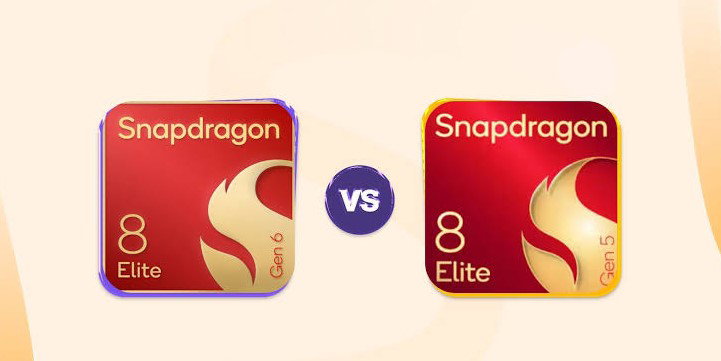
The Snapdragon 8 Elite Gen 6 Vs Gen 5 comparison shows a broader generational shift, with Qualcomm improving not only raw performance but also efficiency, AI processing, graphics, imaging, and connectivity.
| Parameter | Snapdragon 8 Elite Gen 5 |
Snapdragon 8 Elite Gen 6 |
| Manufacturing Process | Built on a 3nm process | Moves to a more advanced 2nm process |
| CPU | Oryon CPU with lower peak clock speeds | Upgraded Oryon CPU with Prime cores reaching up to 5GHz |
| Performance And Efficiency | Previous-generation flagship performance baseline | Around 10% higher performance and up to 37% better power efficiency |
| GPU | Previous-generation Adreno graphics architecture | Upgraded Adreno GPU with around 35% higher performance and up to 40% better efficiency |
| AI And NPU | Hexagon NPU designed for advanced on-device AI | Reengineered Hexagon NPU with around 14% higher performance and up to 20% better AI performance per watt |
| Camera And Imaging | Advanced computational photography and AI-assisted imaging | Adds more sophisticated features such as Intelligent Pixel Control, Elite Color Engine, and Motion Intelligence |
| Connectivity | Previous-generation 5G modem and Wi-Fi 7-class connectivity | X105 5G Modem-RF system with Wi-Fi 8 support and improved wireless efficiency |
Overall, Gen 6 is less of a single-spec upgrade and more of a platform-wide evolution, with the biggest gains centered on efficiency, on-device AI, graphics, and next-generation connectivity.
Beyond the generational upgrades, Qualcomm’s latest lineup also raises another question around naming and positioning. With multiple flagship variants now in play, where does the rumored Snapdragon 8 Elite Gen 6 Pro actually fit in?
Is Snapdragon 8 Elite Gen 6 Pro Officially Announced?
Search interest around Snapdragon 8 Elite Gen 6 Pro has created some confusion about Qualcomm’s naming strategy.
There is currently no officially announced processor carrying the Snapdragon 8 Elite Gen 6 Pro name.
Instead, Qualcomm has introduced two major flagship tiers:
Snapdragon 8 Elite Gen 6 and Snapdragon 8 Elite Extreme Gen 6.
Earlier Snapdragon 8 Elite Gen 6 Leak reports and Snapdragon 8 Elite Gen 6 Rumors frequently suggested that Qualcomm could introduce multiple flagship variants. That speculation appears to have contributed to the widespread use of the “Pro” label before official details became clearer.
The Extreme model occupies the higher end of the lineup.
It is designed for smartphones that prioritize maximum AI, gaming, memory, and imaging performance.
The Extreme version also supports larger AI workloads, including significantly bigger on-device models under supported configurations.
This two-tier approach gives smartphone brands more flexibility.
A premium flagship can use the standard Snapdragon 8 Elite Gen 6, while gaming-focused or ultra-premium models can adopt the Extreme version.
That distinction will become increasingly paramount as both processors appear across new Android devices.
Which Phones Will Use Snapdragon 8 Elite Gen 6?
The Snapdragon 8 Elite Gen 6 family is expected to power flagship smartphones from several major Android manufacturers.
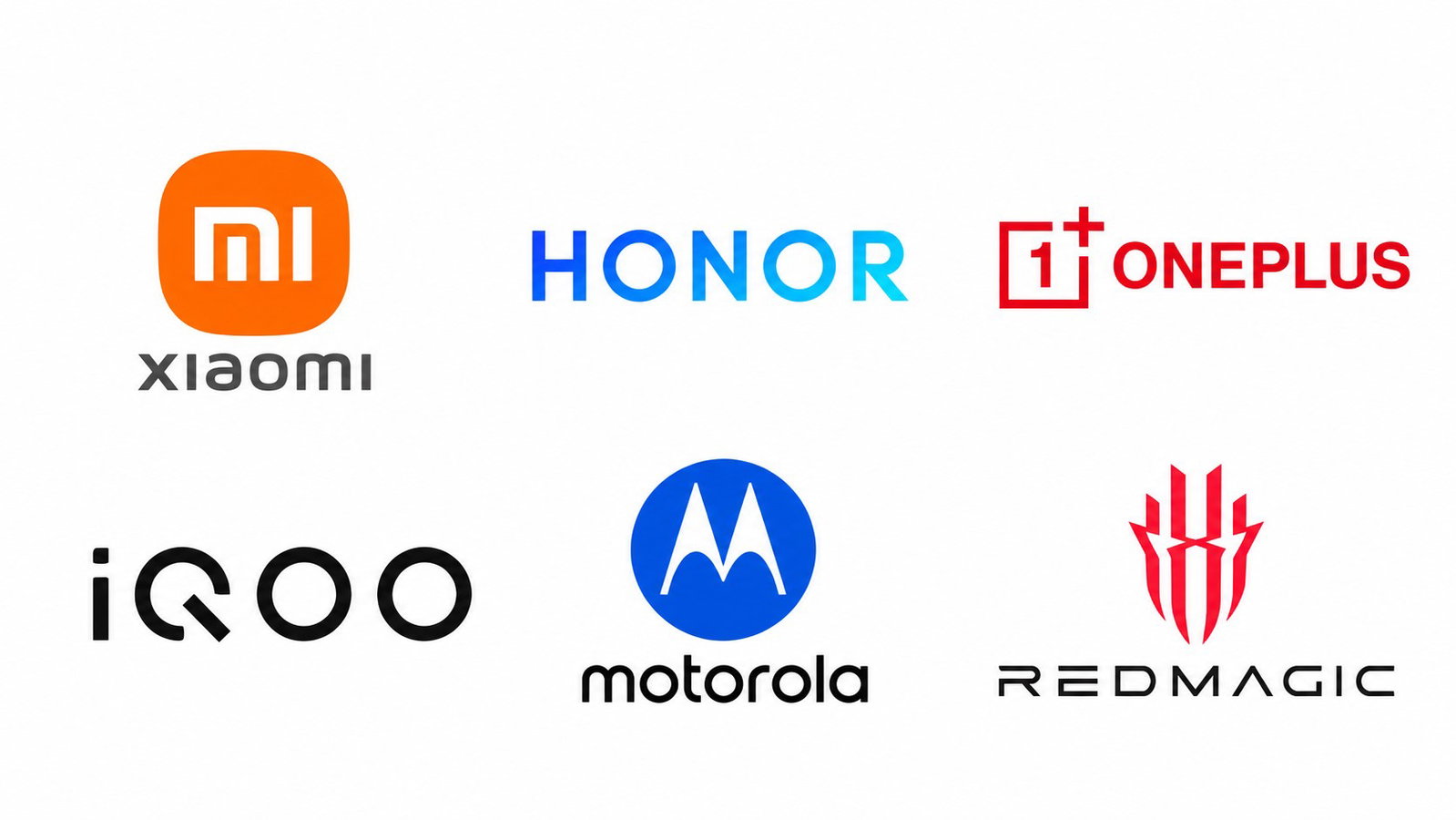
Brands associated with the new generation include Xiaomi, Honor, OnePlus, iQOO, Motorola, RedMagic, and others.
Early product announcements suggest that manufacturers will differentiate between the standard Elite platform and the higher-end Extreme model.
Some premium devices may use the Snapdragon 8 Elite Gen 6, while performance-focused or top-tier variants could move to the Snapdragon 8 Elite Extreme Gen 6.
This means consumers will need to look beyond the phrase “Snapdragon 8 Elite Gen 6 series” when comparing devices.
Two smartphones marketed around the same processor generation may still use different versions of the chipset.
Even then, the processor itself will not determine the complete experience.
Cooling systems, RAM configuration, storage performance, battery capacity, display resolution, software optimization, camera hardware, and manufacturer-specific AI features can significantly influence real-world performance.
In other words, the chipset sets the potential, but the smartphone determines how that potential is used.
Why Snapdragon 8 Elite Gen 6 Matters?
Flagship smartphone processors have reached a point where everyday performance differences are becoming harder to notice. Opening applications, browsing the web, messaging, streaming video, and switching between everyday tasks are already extremely fast on modern premium devices.
That changes what matters in a new processor generation. Efficiency becomes more important. Sustained gaming becomes more adaptable. AI performance becomes more crucial. Camera processing, connectivity, battery behavior, and background intelligence become more critical.
Topics For More Insights
The Snapdragon 8 Elite Gen 6 reflects that transition. Its Oryon CPU increases raw processing power, but Qualcomm is equally focused on everything surrounding it. The NPU handles increasingly sophisticated AI workloads.
The Sensing Hub processes contextual information at lower power. The Adreno GPU combines traditional graphics performance with AI-assisted rendering. The camera system applies intelligence during image capture and video processing.
The modem and wireless platform use increasingly sophisticated optimization techniques to improve connectivity. Taken together, the processor is evolving from a high-performance computing component into a broader intelligence platform.
That shift could have a larger impact on smartphones than incremental benchmark improvements alone.
Conclusion
The Snapdragon 8 Elite Gen 6 represents a significant step in Qualcomm’s flagship mobile strategy. Its 2nm architecture, Oryon CPU reaching up to 5GHz, faster Adreno GPU, upgraded Hexagon NPU, improved computational photography capabilities, Wi-Fi 8 support, and advanced 5G connectivity give it a strong technical foundation.
Yet the more important story is how those components work together. Qualcomm is increasingly designing its flagship chips around smartphones that do more processing locally, understand more context, and rely on AI across multiple parts of the device.
The arrival of the Snapdragon 8 Elite Extreme Gen 6 also creates a clearer distinction between premium and ultra-premium Android devices, giving manufacturers more room to differentiate their flagships. Ultimately, the Snapdragon 8 Elite Gen 6 is not simply about making smartphones faster.
It is about making them more adaptive, efficient, context-aware, and capable of handling increasingly sophisticated AI workloads directly on the device. That may prove to be the defining change of this generation.
Frequently Asked Questions
How Does The Snapdragon 8 Elite Gen 6 Improve On-Device AI Compared With Previous Snapdragon Platforms?
The Snapdragon 8 Elite Gen 6 improves on-device AI through a reengineered Hexagon NPU, stronger AI performance per watt, and tighter coordination between the CPU, GPU, NPU, and Sensing Hub. This allows supported devices to process more contextual and agentic AI workloads locally, reducing dependence on cloud processing while potentially improving responsiveness, privacy, and power efficiency.
What Is The Difference Between Snapdragon 8 Elite Gen 6 And Snapdragon 8 Elite Extreme Gen 6?
The Snapdragon 8 Elite Gen 6 is Qualcomm’s standard flagship platform, while the Snapdragon 8 Elite Extreme Gen 6 targets higher-end devices that need additional AI, gaming, memory, and imaging capability. The Extreme version is positioned for ultra-premium and performance-focused smartphones, whereas the regular Elite chip provides a more balanced flagship configuration across performance, efficiency, and intelligent computing.
Will Snapdragon 8 Elite Gen 6 Make A Noticeable Difference In Real-World Smartphone Performance?
The biggest improvements may appear less in basic tasks and more in sustained gaming, AI processing, computational photography, connectivity, and battery efficiency. Everyday activities such as messaging or browsing are already fast on current flagships, so the Snapdragon 8 Elite Gen 6 is more likely to stand out in demanding workloads and AI-driven features than in simple app-opening speed.
Mon, Sep 28, 2026

Liked what you read? That’s only the tip of the tech iceberg!
Explore our vast collection of tech articles including introductory guides, product reviews, trends and more, stay up to date with the latest news, relish thought-provoking interviews and the hottest AI blogs, and tickle your funny bone with hilarious tech memes!
Plus, get access to branded insights from industry-leading global brands through informative white papers, engaging case studies, in-depth reports, enlightening videos and exciting events and webinars.
Dive into TechDogs' treasure trove today and Know Your World of technology like never before!
Disclaimer - Reference to any specific product, software or entity does not constitute an endorsement or recommendation by TechDogs nor should any data or content published be relied upon. The views expressed by TechDogs' members and guests are their own and their appearance on our site does not imply an endorsement of them or any entity they represent. Views and opinions expressed by TechDogs' Authors are those of the Authors and do not necessarily reflect the view of TechDogs or any of its officials. While we aim to provide valuable and helpful information, some content on TechDogs' site may not have been thoroughly reviewed for every detail or aspect. We encourage users to verify any information independently where necessary.
Loading comments...